Welcome to the
COHORT Project
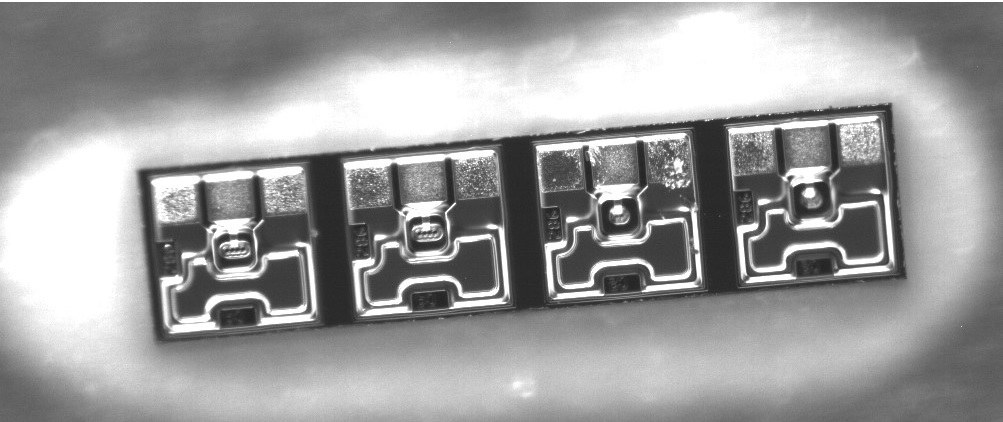
The COHORT consortium is developing novel components based on multi-aperture coherent vertical-cavity surface-emitting laser arrays (MA-VCSELs). The goal of the project is to utilize optimized theoretical simulation software and the latest experimental methods to design components with groundbreaking properties for applications in industrial sensing and data communications, particularly radio over fiber (ROF). In communications, precise design enables stable photon-photon resonances (PPR) for modulation at ultra-high speeds (over 50-100 GHz), leading to significant cost savings in the deployment of mm-Wave cells for new generations of wireless communication and for generation of high-quality coherent THz signals at low cost and energy consumption. The partners have already achieved significant preliminary progress in intensity modulation up to 75 GHz and sub-THz signal generation. In sensor technology, built-in electrical beam steering capabilities enable a reduction in the size and cost of the integrated sensors, as well as an increase in energy efficiency. The developed technologies have high sales potential in well- established markets. VI Systems GmbH (VIS) will act as the lead partner in the COHORT project. VIS is responsible for the design and manufacturing of the MA- VCSEL chips.
Project Goal
The goal of the project is to utilize optimized theoretical simulation software and the latest experimental methods to design components with groundbreaking properties for applications in industrial sensing and data communications, particularly radio over fiber (ROF).
Communication Technology
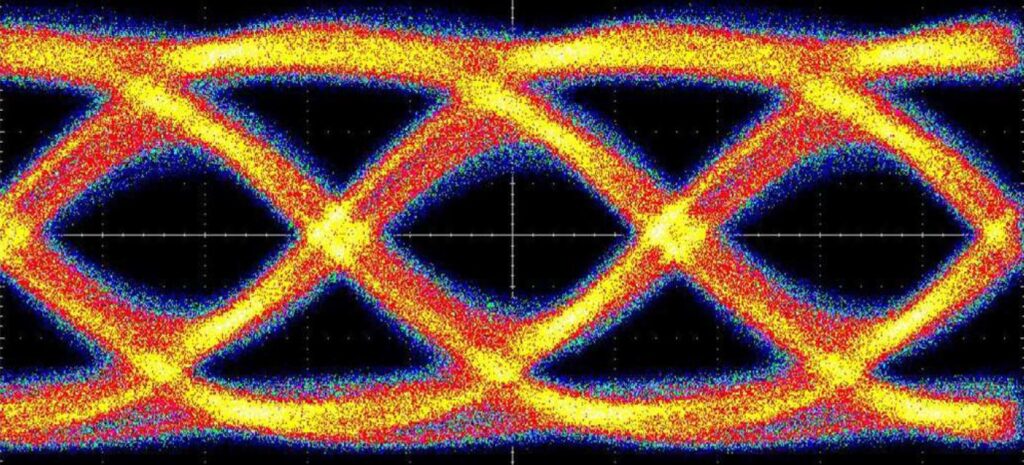
In communications, precise design enables stable photon-photon resonances (PPR) for modulation at ultra-high speeds (over 50–100 GHz), leading to significant cost savings in the deployment of mm-Wave cells for new generations of wireless communication and the generation of high-quality coherent THz signals at low cost and energy consumption.
Sensing Technology
In sensor technology, built-in electrical beam-steering capabilities enable a reduction in the size and cost of integrated sensors, as well as an increase in energy efficiency.
Project Partners

VI Systems GmbH
Berlin, Germany
(Coordinator)
VI Systems GmbH is a pioneering German company specializing in the development and production of high-performance optical components for data transmission and sensing. Founded in 2006 and based in Berlin, the company leverages advanced semiconductor technologies like GaAs and InP to create efficient optical solutions for industries such as telecommunications, aerospace, and automotive. VI Systems’ portfolio includes VCSELs, photodiodes, modulators, and transceivers, crucial for high-speed communication networks and precision sensing applications. Through collaborations with leading industry players, VI Systems continues to drive innovation in optical communication and data infrastructure.

Ruhr-Universität Bochum
Lehrstuhl für Photonik und Terahertztechnologie, Germany
With over 60 years of innovation, Ruhr-Universität Bochum (RUB), one of Germany’s foremost public research universities, combines academic excellence with cutting-edge research in physics and engineering. The Chair of Photonics and Terahertz Technology (PTT) excels in semiconductor laser science, optical imaging and THz spectroscopy and has state-of-the-art experimental systems for ultrafast laser dynamics analysis, novel imaging techniques and THz generation and detection.

Julight Srl
Pavia, Italy
Julight is an innovative Italian company whose expertise enables the development of a wide range of sensors and measuring instruments based on laser and photonic technologies. This is made possible by its solid know-how in light sources, photodetectors, electronic design, software and firmware, and opto-mechanical design.
Julight manufactures and markets non-contact vibration and distance sensors based on self-mixing interferometry (SMI), and offers customized services that leverage photonic and electronic technologies for industrial applications and scientific research.

Politecnico di Torino
Dipartimento di Elettronica e Telecomunicazioni, Italy
With over 160 years of innovation, Politecnico di Torino (PoliTO), one of Europe’s leading technical universities, combines academic excellence and cutting-edge research in engineering and technology. The Department of Electronics and Telecommunications (DET) excels in photonics, microelectronics, and optoelectronics. The DET@PoliTO team has at his own disposal a portfolio of carrier transport and electromagnetic simulation tools for semiconductor optoelectronic devices, including a broad VCSEL simulation suite.
Project Duration
October 1st, 2024 – September 30th, 2027